High-airflow dust collectors are core environmental protection equipment widely used in industrial fields such as metallurgy, cement, chemical engineering, and thermal power, undertaking the task of efficiently capturing fine industrial dust and reducing flue gas emissions. The filter bag cage, as the key supporting component of the filter bag, directly determines the operational stability, filtration efficiency, and service life of the entire dust collection system. Unlike conventional low-airflow dust removal equipment, high-airflow working conditions feature strong flue gas impact, frequent pulse jet cleaning, and high dust load, which put forward stricter requirements on the structural strength, aerodynamic performance, and corrosion resistance of filter bag cages. Reasonable targeted design is the key to solving bag deformation, damage, and system resistance surge in high-airflow dust collectors.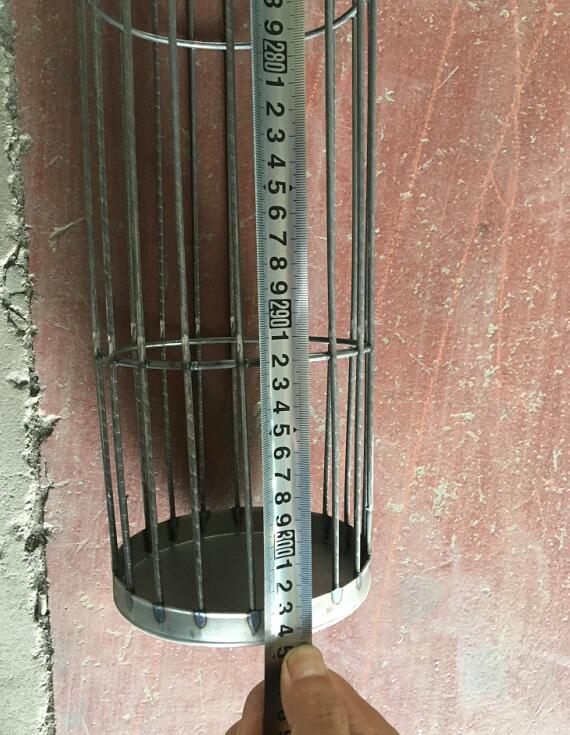
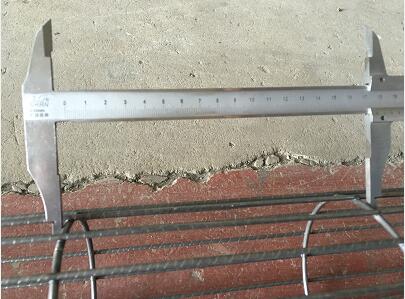
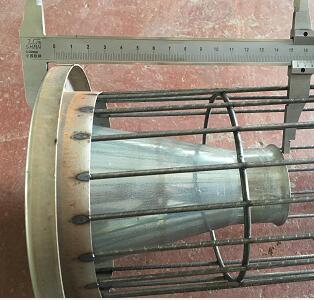
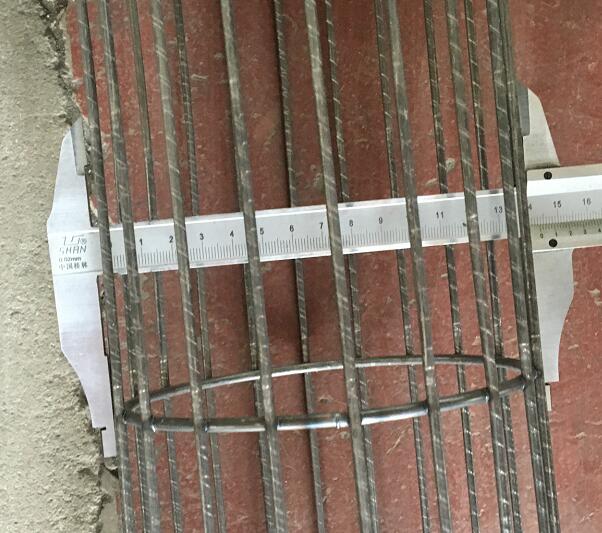
Structural optimization is the core of filter bag cage design for high-airflow scenarios. Traditional simple cylindrical cages often suffer from local deformation and wire breakage under long-term high-speed flue gas scouring and pulse vibration. To adapt to high-airflow operation, the overall integrated welding structure is prioritized in design, replacing segmented splicing structures to eliminate loose and falling risks at splicing joints. The longitudinal support wires are reasonably arranged with a density of 12 to 24 wires per cage according to the equipment airflow load, which balances support rigidity and ventilation performance. Excessively sparse wires lead to filter bag bulge and crease formation, while overly dense wires increase airflow resistance and affect dust filtration efficiency. Meanwhile, the spacing of annular reinforcing rings is controlled at 150 to 200 millimeters, with reinforced dense rings arranged at the upper and lower ends and the middle of the cage to enhance anti-bending and anti-vibration ability, effectively resisting alternating impact of high-speed airflow during continuous operation.
Material selection directly affects the durability and adaptability of the cage in high-airflow dust removal environments. Industrial high-airflow flue gas is usually accompanied by high humidity and trace corrosive gases, so ordinary low-carbon steel is prone to rust and oxidation, which will abrade filter bags and cause secondary pollution. For conventional industrial dust conditions, high-quality low-carbon steel with galvanized surface treatment is the preferred material; hot-dip galvanizing technology forms a dense protective layer on the cage surface, improving rust resistance and surface smoothness to reduce friction and wear between the cage and the filter bag. For harsh working conditions with acidic, alkaline or high-temperature flue gas, stainless steel materials such as 304 and 316L are adopted. Although the cost is slightly higher, their excellent corrosion resistance and high-temperature stability avoid structural failure caused by long-term flue gas scouring, greatly extending the service cycle of the cage and reducing equipment maintenance frequency.
Aerodynamic and detailed structural design cannot be ignored for high-airflow matching. The top of the cage adopts an arc-shaped rounded transition design to eliminate sharp corners, which prevents local turbulence of high-speed airflow, reduces flue gas impact pressure, and avoids local wear and perforation of the filter bag top. The bottom of the cage is designed with a closed flat or arc structure to prevent dust accumulation and avoid uneven airflow disturbance caused by dust deposition. In terms of dimensional matching, the cage diameter and height are precisely matched with the filter bag parameters to ensure a small uniform gap between the cage and the bag. An overly large gap causes bag flutter and collision damage under high airflow, while an overly small gap leads to tight fitting, poor ventilation, and increased system operating resistance. In addition, the welding process is strictly standardized: all welding points are fully welded and polished smoothly without burrs, sharp edges and welding slag, fundamentally eliminating the risk of filter bag scratching and tearing during high-frequency airflow vibration.
In conclusion, the design of filter bag cages for high-airflow dust collectors must take high airflow impact, frequent vibration and complex flue gas characteristics as the core starting point. Through scientific structural layout, targeted material selection, refined aerodynamic optimization and standardized process control, the designed cage can maintain stable structural performance under long-term high-load operation. A high-quality filter bag cage not only protects the filter bag, reduces equipment failure rate and operating cost, but also ensures the long-term efficient and stable operation of high-airflow dust collection systems, providing solid technical support for industrial flue gas purification and environmental protection emission compliance.
